Building
How Venice Classifies, Regulates, and Uses Its Buildings
Venice contains 15,485 buildings within its historic center, each shaped by centuries of architectural tradition, planning policies, and contemporary pressures from tourism, depopulation, and heritage protection. Understanding how the city classifies, manages, and uses its buildings is essential for interpreting urban patterns, zoning decisions, and the residential decline documented in recent decades.
This page summarizes the building classification system used by the City of Venice, explains the planning and cadastre (Catasto) frameworks behind it, and presents quantitative insights into building types and uses—supported by building-level data gathered and verified by the Venice Project Center B25 team.
How Venice Classifies Buildings
Venice relies on an integrated system of architectural typology, functional-use categories, and urban-planning classifications. These come from municipal datasets, national cadastre records (Catasto), and the Variante per la Città Antica zoning plan.
Architectural Typology (Tipologia)
Architectural typology describes when and how a building was constructed. Venice’s typology codes classify each building by century and major use group:
| Code | Italian Description | English Meaning |
|---|---|---|
|
R_PREOTTO |
unità edilizie residenziali preottocentesche | Residential buildings pre-19th century |
|
R_OTTO |
unità edilizie residenziali ottocentesche | Residential buildings 19th century |
|
R_NOVE |
unità edilizie residenziali novecentesche | Residential buildings 20th century |
|
NR_PREOTTO |
non-residential pre-19th century | Non-residential, pre-19th century |
|
NR_OTTO |
non-residential 19th century | Non-residential, 19th century |
|
NR_NOVE |
non-residential 20th century | Non-residential, 20th century |
|
SP_PREOTTO / SP_OTTO / SP_NOVE |
special-use buildings | Special use (religious, institutional, civic) |
|
ALTRO |
other or unclassified | Other / not classifiable
|
Floor Use / Functional Category (Destinazione Piano)
These codes describe the use assigned to floors of a building. They are essential in Venice because zoning and flood-risk rules tightly regulate ground-floor use.
| Code | Italian Description | English Meaning |
|---|---|---|
| A | spazi per la mobilità meccanizzata terrestre | spaces for mechanized land mobility |
| B | spazi per la mobilità ferroviaria | railway mobility spaces |
| D | impianti scoperti per pratica sportiva e lo spettacolo sportivo | open-air sports and sports-event facilities |
| E | strutture per l’istruzione obbligatoria | compulsory education facilities |
| F | attrezzature tecnologiche | technological installations |
| G | altre strutture pubbliche e/o per attività collettive – attrezzature militari | public/collective facilities – military facilities |
| H | abitazioni ordinarie e/o specialistiche – attrezzature cimiteriali | ordinary and/or specialized housing – cemetery facilities |
| L | attività ricettive | accommodation/hospitality activities |
| M | strutture culturali private | private cultural facilities |
| N | edifici non utilizzati | unused buildings |
| O | magazzini e depositi | warehouses and storage |
| XX | non definito | undefined |
Functional Type (Tipo Funzione)
Functional codes describe specific intended uses, frequently for public, cultural, or utility buildings.
| Code | Italian Description | English Meaning |
|---|---|---|
| SP3 | caserme | barracks |
| SP4 | sedi carcerarie | prisons/detention facilities |
| SP7 | distribuzione energia elettrica | electricity distribution |
| SP8 | distribuzione gas | gas distribution |
| SP9 | distribuzione acqua | water distribution |
| SP11 | mense | cafeterias/mess halls |
| SP15 | istituti di credito | banks/credit institutions |
| SP16 | uffici giudiziari | judicial offices |
| SP17 | altri uffici aperti al pubblico | other public offices |
| SP18 | centri di calcolo | data centers |
| SP21 | centri di ricerca | research centers |
| SP22 | sedi espositive | exhibition halls |
| SP23 | biblioteche | libraries |
| SP24 | archivi | archives |
| SP25 | centri congressi polivalenti | multipurpose conference centers |
| SP26 | teatri | theaters |
| SP27 | cinematografi | cinemas |
| SP28 | locali per lo spettacolo | performance venues |
| SP29 | sala da ritrovo e da gioco | meeting & gaming halls |
| SP30 | strutture religiose | religious facilities |
| SP31 | ospedali, cliniche | hospitals/clinics |
| SP32 | ospedali diurni | day hospitals |
| SP33 | poliambulatori | outpatient clinics |
| AV | scuola materna | preschool/kindergarten |
| BV | scuola elementare | elementary school |
| C | scuola media | middle school |
| D | scuola secondaria | high school |
| E | università | university |
| IS | impianti coperti e scoperti per la pratica sportiva | indoor/outdoor sports facilities |
| MA1 | cantieristica minore | small-scale shipyards |
| MA2 | cantieristica maggiore | large shipyards |
| MA3 | artigianato, industria di produzione di beni vari | craft/industry for goods production |
| MA4 | artigianato di servizio | service-oriented craft industries |
| MA5 | rimessaggio e noleggio piccole barche | storage & rental of small boats |
| GI | giardini aperti al pubblico | public gardens |
| FA | attrezzature ferroviarie | railway equipment |
| AU | autorimesse | garages |
| IT | impianti tecnologici | technological plants |
| AM | attrezzature militari | military facilities |
| NU | edifici non utilizzati | unused buildings |
| 0 | non definito | undefined |
Architectural Configuration & Frontage Typologies (Tipi di Configurazione Architettonica)
Venice uses a highly detailed architectural classification system to describe the structural layout, frontage composition, and construction era of its buildings.
These codes identify whether a structure is single-cell, bi-cellular, tri-cellular, shed-type, modular, or unified—while also indicating how later additions, renovations, or contextual integration affect its architectural character.
This typology is essential for understanding how historic Venetian buildings were originally organized, how they evolved through centuries of modification, and how they relate to the surrounding urban fabric.
| Code | Italian Description | English Description |
|---|---|---|
| A | Preottocentesche originarie a fronte monocellulare | Pre-19th century original buildings with a single-cell frontage |
| A1 | Preottocentesche originarie a fronte monocellulare con elemento distributivo aggiunto | Pre-19th century original single-cell buildings with an added circulation element |
| B | Preottocentesche originarie a fronte bicellulare | Pre-19th century original buildings with a two-cell frontage |
| B/SU | Preottocentesche originarie a fronte bicellulare con struttura unitaria | Pre-19th century two-cell frontage buildings with unified structure |
| B1 | Preottocentesche originarie a fronte bicellulare con elemento distributivo interposto | Pre-19th century two-cell frontage with interposed circulation element |
| Bg | Preottocentesche originarie a fronte bicellulare gerarchizzato | Pre-19th century hierarchical two-cell frontage |
| C | Preottocentesche originarie a fronte tricellulare | Pre-19th century three-cell frontage |
| C/knt | Preottocentesche tricellulare / Novecentesche a capannone | Pre-19th century tricellular / 20th century shed-type buildings |
| C/Nd | Preottocentesche tricellulare / Novecentesche non integrate | Pre-19th century tricellular / 20th century or earlier non-integrated buildings |
| D | Preottocentesche originarie a blocco | Pre-19th century block-type buildings |
| fa | Preottocentesche oggetto di fusione od addizione | Pre-19th century buildings altered through fusion/addition |
| Ka | Preottocentesche a capannone a fronte acqueo | Pre-19th century warehouse-type buildings facing the water |
| Ka/A | Capannone fronte acqueo / monocellulare | Waterfront warehouse / pre-19th century single-cell |
| Ka/A1 | Capannone fronte acqueo / monocellulare con aggiunta | Waterfront warehouse / pre-19th century single-cell w/ added element |
| Ka/B | Capannone fronte acqueo / bicellulare | Waterfront warehouse / pre-19th century two-cell |
| Ka/D | Capannone fronte acqueo / blocco | Waterfront warehouse / pre-19th century block-type |
| Ka/Ne | Capannone fronte acqueo / novecentesche di pregio esterno limitato | Waterfront warehouse / 20th century limited-value exterior |
| Ka/Or | Capannone fronte acqueo / originarie | Waterfront warehouse / original buildings |
| Ka/pt | Capannone fronte acqueo | Waterfront warehouse |
| Kn | Novecentesche a capannone | 20th century shed-type buildings |
| Kna | Novecentesche a capannone a fronte acqueo | 20th century shed-type waterfront buildings |
| Kna/Ne | Capannone fronte acqueo / novecentesche di pregio esterno limitato | Shed waterfront / 20th century limited-value exterior |
| Knt | Novecentesche a capannone senza fronte acqueo | 20th century shed-type buildings without a waterfront |
| Knt/A1 | Capannone senza fronte acqueo / monocellulare con aggiunta | Non-waterfront shed / pre-19th century single-cell w/ added element |
| Knt/Ne | Capannone senza fronte acqueo / pregio esterno limitato | Non-waterfront shed / 20th century limited-value exterior |
| Koa | Ottocentesche a capannone a fronte acqueo | 19th century shed-type waterfront buildings |
| Koa/B | Capannone ottocentesco / bicellulare preottocentesco | 19th century shed waterfront / pre-19th century two-cell |
| Koa/O | Capannone ottocentesco / originarie | 19th century shed waterfront / original buildings |
| Koa/Or | Capannone ottocentesco / ristrutturazione | 19th century shed waterfront / renovated buildings |
| Kot | Ottocentesche a capannone senza fronte acqueo | 19th century shed-type buildings without waterfront |
| Kot/O | Capannone ottocentesco / originarie | 19th century shed / original buildings |
| Kot/Or | Capannone ottocentesco / ristrutturazione | 19th century shed / renovated buildings |
| Kt | Preottocentesche a capannone senza fronte acqueo | Pre-19th century shed without waterfront |
| Kt/B | Capannone senza fronte acqueo / bicellulare | Pre-19th century shed / two-cell frontage |
| Kt/Ne | Capannone senza fronte acqueo / novecentesche di pregio esterno limitato | Pre-19th shed / 20th century limited-value exterior |
| Kt/Or | Capannone senza fronte acqueo / ottocentesche ristrutturate | Pre-19th shed / 19th century renovated |
| Kt/pt | Capannone senza fronte acqueo / parzialmente trasformate | Pre-19th shed / partially transformed |
| N | Novecentesche originarie di complessivo pregio architettonico | 20th century buildings of architectural value |
| Na | — | — (Italian not provided in sheet) |
| Nd | Novecentesche o anteriori non integrate nel contesto | 20th century or earlier, not integrated into the urban context |
| Ne | Novecentesche di pregio esterno limitato | 20th century w/ limited-value exterior |
| Nr | Novecentesche integrate nel contesto | 20th century buildings integrated into context |
| O | Ottocentesche originarie | 19th century original buildings |
| Or | Ottocentesche di ristrutturazione | 19th century renovated buildings |
| P | Preottocentesche di impianto non ripetuto | Pre-19th century non-repetitive layout |
| Po | Ottocentesche di impianto non ripetuto | 19th century non-repetitive layout |
| pt | Preottocentesche parzialmente trasformate | Pre-19th century partially transformed |
| SM | Preottocentesche a struttura modulare | Pre-19th century modular-structure buildings |
| SMo | Preottocentesche originarie o ristrutturate a struttura modulare | Pre-19th original or renovated modular buildings |
| SP | Preottocentesche a struttura modulare complessa | Pre-19th century complex modular structure |
| SU | Preottocentesche a struttura unitaria | Pre-19th century unified structure |
| SU/fa | Preottocentesche a struttura unitaria | Pre-19th unified structure (variant) |
| SU/Or | Unitaria / ottocentesche ristrutturate | Pre-19th unified / 19th century renovated |
| SUn | Preottocentesche a struttura unitaria | Pre-19th unified structure (variant) |
| SUo | Preottocentesche originarie o ristrutturate a struttura unitaria | Pre-19th original or renovated unified structure |
Catasto (Cadastral Registry of Venice)
The Catasto is Italy’s official cadastral registry, maintained by the Agenzia delle Entrate, which documents every property through unique identifiers, map sheets (fogli), parcels (mappali), and official building records. In Venice, the Catasto plays a vital role because of the city’s dense, irregular urban fabric and centuries of incremental construction, subdivision, and reconstruction. Each building footprint is legally tied to a cadastral parcel, which establishes ownership boundaries, the number of units within a structure, and the authoritative geometry used for taxation and administrative purposes.
For our project, the Catasto is essential because it provides the legal and structural foundation for all other building information. While city planning datasets describe land use, zoning restrictions, and functional classifications, the Catasto ensures that each building is correctly identified, referenced, and spatially matched. It allows us to confirm whether buildings have been merged, subdivided, or altered, and to connect each structure to its official parcel through fields such as Comune (L736 for Venice), Foglio, Mappale, and the unique building key (CXF). These data serve as a baseline for validating building counts, confirming unit boundaries, and linking our alias system to the city's authoritative records.
In practice, the Catasto allows our team to accurately track building units and ensure that our classification, occupancy estimation, and field-verification efforts rest on a precise, legally recognized foundation. Without integrating cadastral data, it would be impossible to reliably merge addresses, water meters, census information, and tourist accommodation records at the building scale—making the Catasto a cornerstone for any rigorous analysis of Venice’s built environment.
Visual Fieldwork: Examples of Building Typologies
As part of our project, we documented on site how the main architectural typology classes (A, A1, B, Bg, C, Fa, Nd, Nr, Pt, SU, SUo) appear in the historic centre. The images below show representative façades for each class, illustrating differences in frontage width, window rhythm, structural unity, and visible transformations over time.
-
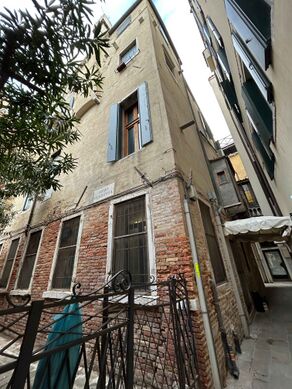 A (Class A) – pre-19th-century monocellular building with a narrow, vertically organised façade.
 -
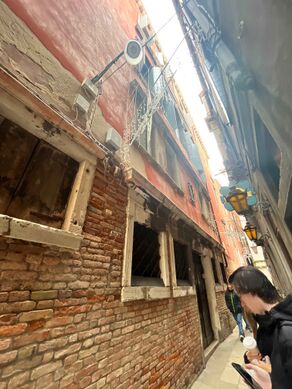 A (Class A) – single-cell frontage with simple window rhythm typical of early residential fabric.
 -
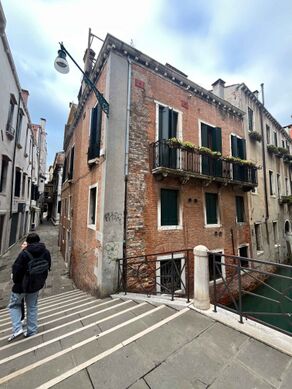 A1 (Class A1) – monocellular structure with an added circulation element, visible in the irregular volume.
 -
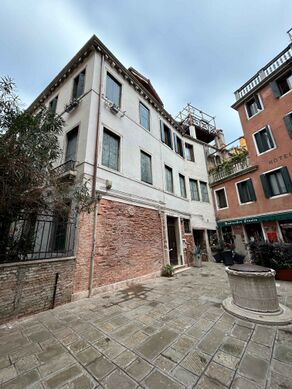 B (Class B) – bicellular frontage with two principal vertical bays and balanced openings.
 -
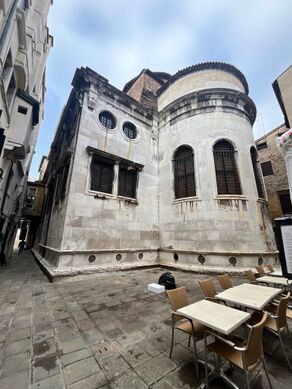 B (Class B) – wider two-cell façade facing the campo, showing paired window groups.
 -
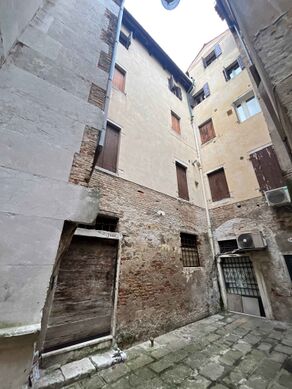 B (Class B) – historic bicellular palazzetto with symmetrical composition.
 -
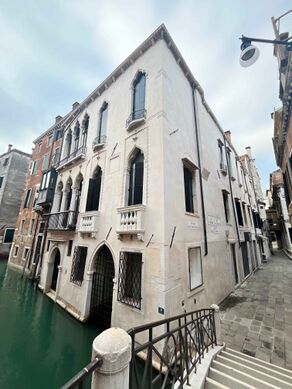 Bg (Class Bg) – hierarchical bicellular building where one bay is emphasised over the other.
 -
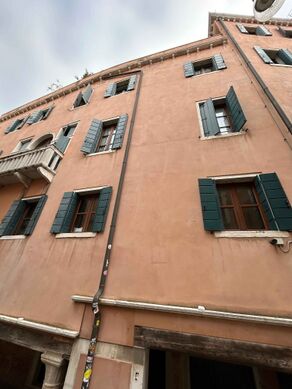 C (Class C) – tricellular palazzo with three main vertical axes and rich stone detailing.
 -
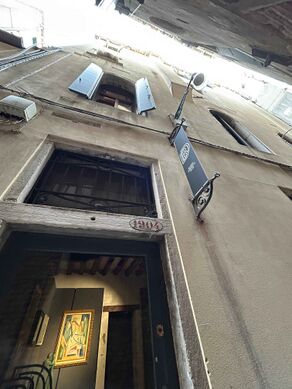 C (Class C) – large three-bay structure overlooking a campo, typical of higher-status housing.
 -
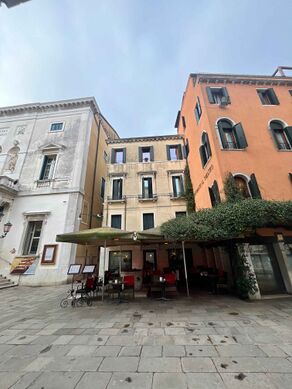 Fa (Class Fa) – pre-19th building showing fusion/addition, visible in the mixed materials and altered ground floor.
 -
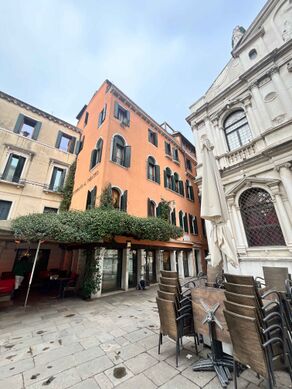 Fa (Class Fa) – accreted façade with later infill and irregular window spacing.
 -
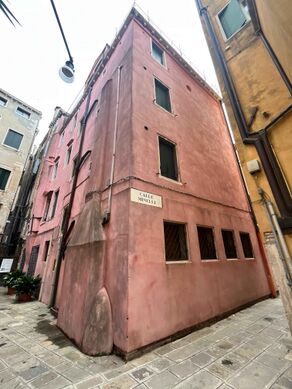 Fa (Class Fa) – original volume expanded with new structural elements at the base.
 -
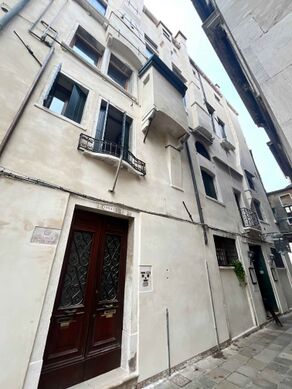 Fa (Class Fa) – combined volumes and patchwork masonry indicating multiple building phases.
 -
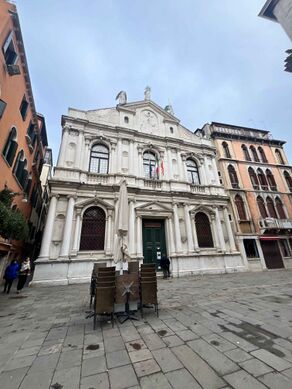 Pt (Class Pt) – pre-19th structure partially transformed, with raised ground floor and altered openings.
 -
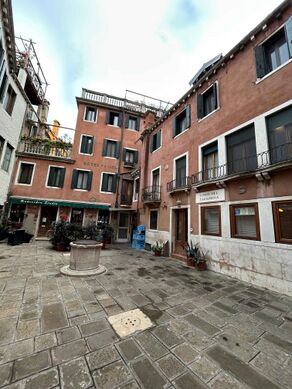 Nd (Class Nd) – non-integrated building whose proportions and façade treatment differ from surrounding fabric.
 -
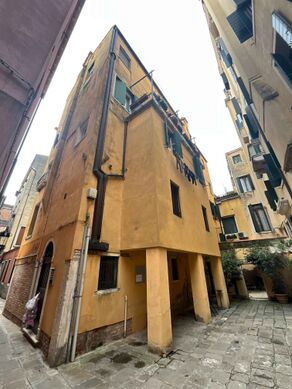 Nr (Class Nr) – 20th-century infill that is visually well integrated through similar materials and window rhythm.
 -
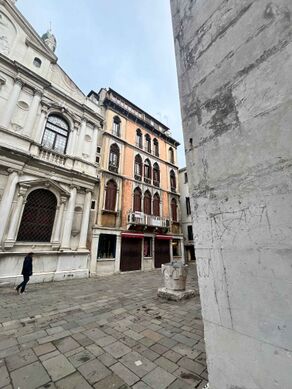 SU (Class SU) – unified pre-19th structure with coherent façade and continuous cornice line.
 -
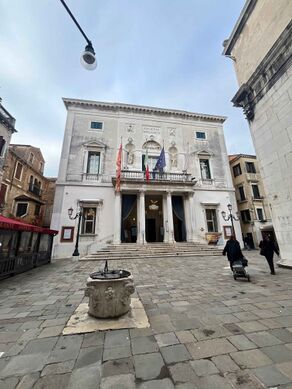 SUo (Class SUo) – original unitary building that has been renovated while maintaining structural unity.
 -
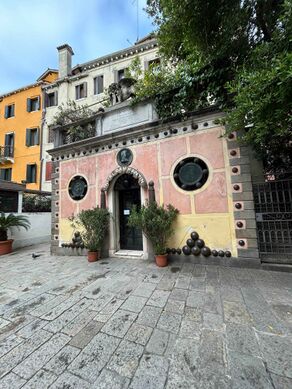 SUo (Class SUo) – renovated unitary block with consistent window pattern and detailing.


